Day 21: Pin in Chess – Types of Pins & How to Use Them
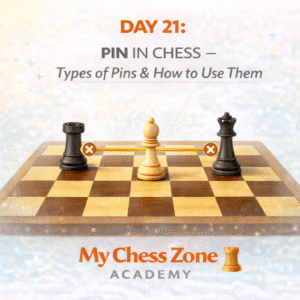
A pin is one of the most common and effective tactics in chess.
Beginners often miss pins or fail to use them correctly.
This guide explains what a pin is, its types, and how beginners can use pins safely.
What is a Pin in Chess?
A pin happens when:
👉 A piece cannot move because moving it would expose a more valuable piece behind it.
The pinned piece becomes restricted.
Types of Pins in Chess
Absolute Pin
-
The pinned piece cannot move at all
-
Moving it would expose the king
📌 Absolute pins are very strong.
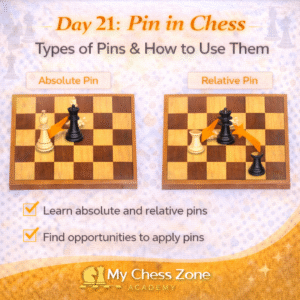
Relative Pin
-
The pinned piece can move
-
But moving it loses a queen, rook, or other valuable piece
Relative pins are still useful.
Why Pins Are Powerful
-
They limit opponent movement
-
They create pressure without capturing
-
They help win material
-
They make attacks easier
Pins force opponents to play defensively.
How Beginners Can Use Pins
-
Pin pieces near the king
-
Use bishops, rooks, and queens
-
Combine pins with attacks
-
Increase pressure on the pinned piece
Simple pins work best.

Common Beginner Mistakes
-
Ignoring pinned pieces
-
Breaking your own pin carelessly
-
Forgetting the pin can be removed
-
Over-attacking without support
Awareness is key.
Golden Rule for Beginners
Before every move, ask:
👉 “Is any piece pinned?”
This helps both attack and defense.
📝 Free Trial Chess Class
Want your child to:
-
Understand chess tactics
-
Use pins confidently
-
Reduce simple mistakes
👉 Book a FREE Trial Chess Class – My Chess Zone Academy
Free Trial Class – My Chess Zone
#Chess #PinInChess #ChessTactics #LearnChess #ChessForBeginners #BeginnerChess #ChessBasics #ChessLearning #ChessLessons #ChessCourse #OnlineChessClasses #ChessForKids #ChessForParents #ChessTraining #ChessEducation #ChessImprovement #ChessSkills #ChessMind #ChessPractice #ChessAcademy #ChessCoach #ChessStudy #ChessGame #ChessLife
#ChessDaily #ChessTips #ChessRules #ChessStrategy #KidsChess #YouthChess #MyChessZoneAcademy