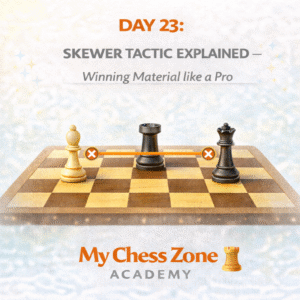
Day 23: Skewer Tactic Explained – Winning Material like a Pro
The skewer is a powerful chess tactic that helps players win material with simple logic.
It looks similar to a pin, but works in the opposite way.
This guide explains what a skewer is and how beginners can use it correctly.
What is a Skewer in Chess?
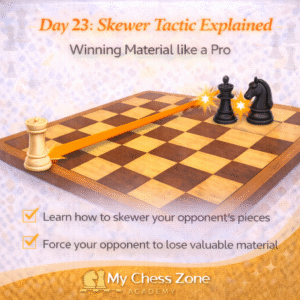
A skewer happens when:
👉 A more valuable piece is attacked first,
👉 And when it moves, a less valuable piece behind it is lost.
The front piece is forced to move.
Why Skewers Are Effective
-
Opponent has no good choice
-
Material is usually won
-
Easy to spot with practice
-
Very common in beginner games
Skewers punish poor piece placement.
Common Skewer Examples
-
Queen in front, rook behind
-
King in front, queen behind
-
Rook in front, bishop behind
📌 Rooks, bishops, and queens are best for skewers.
How Beginners Can Use Skewers
-
Look for pieces lined up
-
Attack the more valuable piece first
-
Make sure your attacking piece is safe
-
Use open files and diagonals
Simple skewers work best.
Common Beginner Mistakes
-
Confusing skewer with pin
-
Attacking the wrong piece first
-
Missing counter-attacks
-
Playing too fast
Slow thinking avoids mistakes.
Golden Rule for Beginners
Before every move, ask:
👉 “Are any opponent pieces lined up?”
This helps spot skewers quickly.
📝 Free Trial Chess Class
Free Trial Class – My Chess Zone
Want your child to:
-
Learn chess tactics step by step
-
Win material confidently
-
Improve faster
👉 Book a FREE Trial Chess Class – My Chess Zone Academy
Free Trial Class – My Chess Zone
#Chess #Skewer #ChessTactics #LearnChess #ChessForBeginners #BeginnerChess #ChessBasics #ChessLearning #ChessLessons #ChessCourse #OnlineChessClasses #ChessForKids #ChessForParents #ChessTraining #ChessEducation #ChessImprovement #ChessSkills #ChessMind #ChessPractice #ChessAcademy #ChessCoach #ChessStudy #ChessGame #ChessLife #ChessDaily #ChessTips #ChessRules #ChessStrategy #KidsChess #YouthChess #MyChessZoneAcademy