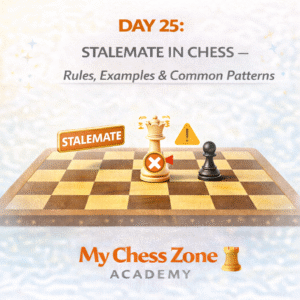
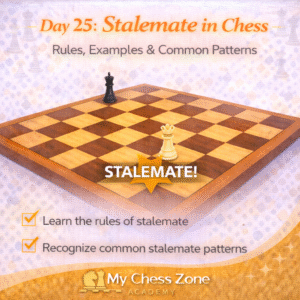
Day 25: Stalemate in Chess – Rules, Examples & Common Patterns
A stalemate is one of the most common ways a winning game turns into a draw.
Many beginners lose points because they do not recognize stalemate in time.
This guide explains what stalemate is, how it happens, and how to avoid it.
What is Stalemate?
A stalemate happens when:
👉 The player to move has no legal moves,
👉 The king is not in check.
The game ends immediately as a draw.
Why Stalemate is Important
-
Saves lost positions
-
Ruins winning positions if missed
-
Very common in beginner games
-
Often happens in endgames
Understanding stalemate prevents unnecessary draws.
Common Stalemate Patterns
-
King trapped with no legal squares
-
Blocking all pawn moves
-
Giving unnecessary checks
-
Poor queen or rook coordination
Recognizing these patterns is essential.
How to Avoid Stalemate
-
Always give the opponent a legal move
-
Be careful when attacking a lone king
-
Do not rush checkmates
-
Improve piece coordination
Patience is key.
Common Beginner Mistakes
-
Checking without thinking
-
Trapping the king accidentally
-
Ignoring pawn moves
-
Forgetting whose turn it is
Awareness prevents mistakes.
Golden Rule for Beginners
Before every move in a winning position, ask:
👉 “Does my opponent still have a legal move?”
This habit saves wins.
📝 Free Trial Chess Class
Free Trial Class – My Chess Zone
Want your child to:
-
Understand draw rules
-
Avoid stalemate mistakes
-
Convert winning positions
👉 Book a FREE Trial Chess Class – My Chess Zone Academy
Free Trial Class – My Chess Zone
#Chess #Stalemate #ChessDraw #ChessRules #LearnChess #ChessForBeginners #BeginnerChess #ChessBasics #ChessLearning #ChessLessons #ChessCourse #OnlineChessClasses #ChessForKids #ChessForParents #ChessTraining #ChessEducation #ChessImprovement #ChessSkills #ChessMind #ChessPractice #ChessAcademy #ChessCoach #ChessStudy #ChessGame #ChessLife #ChessDaily #ChessTips #ChessStrategy #KidsChess #YouthChess #MyChessZoneAcademy