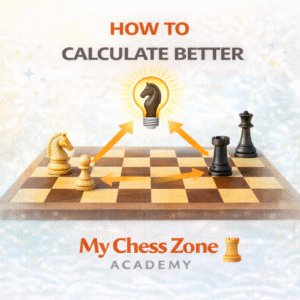
How to Calculate Better in Chess – Beginner Guide
Good calculation helps players choose the right move, avoid blunders, and play confidently.
Beginners often calculate poorly because they guess moves instead of thinking clearly.
This guide explains how to calculate better in chess, in a simple and practical way.
What Does Calculation Mean in Chess?
Calculation means:
👉 Thinking ahead before making a move
It includes:
-
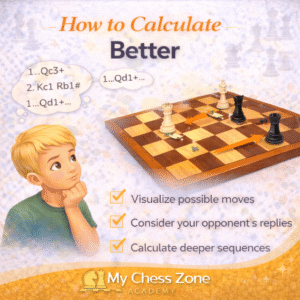
Visualizing moves
-
Predicting opponent replies
-
Choosing the safest or strongest option
Good calculation reduces mistakes.
Simple Steps to Calculate Better
-
Look for checks first
-
Then look for captures
-
Then look for threats
-
Calculate only 2–3 moves ahead
-
Stop when the position becomes clear
You don’t need deep calculation as a beginner.
Why Beginners Calculate Poorly
-
Playing moves too fast
-
Not checking opponent replies
-
Calculating only their own moves
-
Ignoring piece safety
Slowing down improves calculation immediately.
How to Improve Calculation Skills
-
Play slow games
-
Solve simple puzzles daily
-
Think before every move
-
Review mistakes after games
Accuracy is more important than speed.

Golden Rule for Beginners
Before every move, ask:
👉 “What happens after my opponent’s reply?”
This question improves calculation instantly.
📝 Free Trial Chess Class
Want your child to:
- Calculate calmly
- Reduce blunders
- Play with confidence
Free Trial Class – My Chess Zone
#Chess #ChessCalculation #LearnChess #ChessForBeginners #BeginnerChess #ChessBasics #ChessLearning #ChessLessons #ChessCourse #OnlineChessClasses #ChessForKids #ChessForParents #ChessTraining #ChessEducation #ChessImprovement #ChessSkills #ChessMind #ChessPractice #ChessAcademy #ChessCoach #ChessStudy #ChessGame #ChessLife #ChessDaily #ChessTips #ChessRules #ChessStrategy #ChessTactics #KidsChess #YouthChess #MyChessZoneAcademy