Day 26: 50-Move Rule in Chess – Complete Beginner’s Explanation
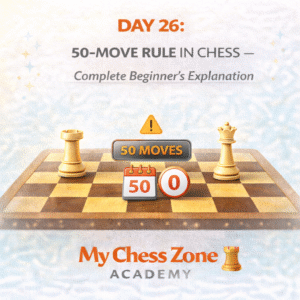
The 50-move rule is an important chess rule that can end a game in a draw.
Many beginners don’t know this rule and get confused during endgames.
This guide explains what the 50-move rule is and when it applies, in a simple way.
What is the 50-Move Rule?
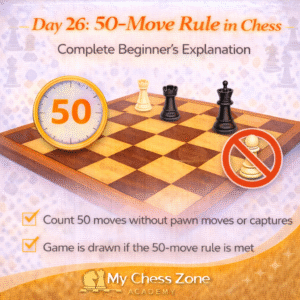
The 50-move rule states:
👉 If 50 consecutive moves are played without:
-
Any pawn move, and
-
Any capture,
then either player can claim a draw.
When Does the Count Start?
-
The count starts after the last pawn move or capture
-
Each player move counts as one move
-
Both players must complete 50 moves each
If a pawn moves or a capture happens, the count resets to zero.
Why the 50-Move Rule Exists
-
Prevents endless games
-
Avoids unnecessary play
-
Protects players from forced waiting
-
Common in endgames
It ensures fairness.
Important Things Beginners Must Know
-
The draw is not automatic
-
A player must claim the draw
-
If you don’t claim, the game continues
-
Pawn moves or captures cancel the count
Common Beginner Mistakes
-
Thinking the game ends automatically
-
Forgetting a pawn move resets the count
-
Confusing it with repetition
-
Not knowing when to claim
Knowing the rule avoids confusion.
Golden Rule for Beginners
If there has been no pawn move or capture for a long time, ask:
👉 “Can I claim a draw by the 50-move rule?”
📝 Free Trial Chess Class
Free Trial Class – My Chess Zone
#Chess #50MoveRule #ChessRules #ChessEndgame #ChessDraw #LearnChess #ChessForBeginners #BeginnerChess #ChessBasics #ChessLearning #ChessLessons #ChessCourse #OnlineChessClasses #ChessForKids #ChessForParents #ChessTraining #ChessEducation #ChessImprovement #ChessSkills #ChessMind #ChessPractice #ChessAcademy #ChessCoach #ChessStudy #ChessGame #ChessLife #ChessDaily #ChessTips #ChessStrategy #KidsChess #YouthChess #MyChess