♟ How to Learn Chess Effectively (For Kids & Complete Beginners)
Chess is not just a board game; it is a brain-building activity that helps kids develop focus, logical thinking, memory, and decision-making. But most beginners don’t know how to start learning chess properly. They play without a plan, without structure, and without understanding how to improve.
This guide explains the right way to learn chess step-by-step, especially designed for children and complete beginners.
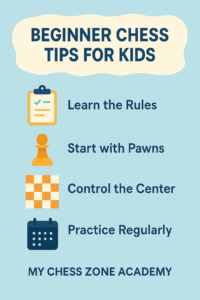
⭐ Step 1 — Learn the Basic Rules Clearly
Before learning strategy or openings, kids must first learn:
-
how each piece moves
-
how pieces capture
-
what is check
-
what is checkmate
-
castling
-
pawn promotion
Do NOT rush into openings in the beginning. First, master the fundamentals.
⭐ Step 2 — Understand Why Pieces Are Important
While learning, kids should know why some pieces are more valuable:
-
Pawn = 1
-
Knight & Bishop = 3
-
Rook = 5
-
Queen = 9
This helps children make better decisions and avoid unnecessary exchanges.
⭐ Step 3 — Practice Small Mini Games
Instead of playing full games at the start, let kids play:
-
queen vs king
-
rook vs king
-
knight catching pawns
This builds confidence and pattern recognition faster.
⭐ Step 4 — Learn Simple Checkmates
Begin with very basic checkmates:
-
queen and king vs king
-
rook and king vs king
Kids love watching themselves checkmate the king. It builds motivation.
⭐ Step 5 — Start Solving Puzzles Daily
Puzzles are one of the strongest learning tools. They help kids:
-
calculate faster
-
spot tactics quickly
-
understand combinations
-
recognize checkmate patterns
Start with:
-
1-move puzzles
-
then 2-move
-
then 3-move
But slowly and consistently.
⭐ Step 6 — Avoid Common Beginner Mistakes
Most beginners:
-
move without thinking
-
leave pieces hanging
-
attack without plan
Teach children to ask:
“What is my opponent threatening?”
This single question reduces 70% mistakes.
⭐ Step 7 — Practice Regularly, Not Randomly
Playing once a week is NOT enough.
A better method:
-
15 minutes learning
-
10 minutes puzzles
-
15 minutes playing
Daily consistency beats long weekly sessions.
⭐ Step 8 — Do NOT Memorize Openings
Most kids start copying openings without understanding ideas.
In the beginning:
-
follow principles
-
develop pieces
-
control the center
-
castle early
This works better than memorizing moves.
⭐ Step 9 — Learn Tactics Early
Tactics help kids win games faster. Teach:
-
forks
-
pins
-
skewers
-
discovered attack
-
checkmate patterns
Winning simple tactics is more important than memorizing openings at beginner level.
⭐ Step 10 — Learn From a Good Coach
Many kids waste months playing randomly online. A structured coach:
-
corrects mistakes
-
teaches important skills
-
guides tournaments
-
builds confidence
-
motivates children
Effective learning needs proper guidance.
⭐ Final Message
Chess becomes more enjoyable when children learn it step-by-step instead of rushing. With proper guidance, daily learning, puzzles, and structured rules, every child can become a strong thinker and confident chess player.
📢 Want Your Child to Start Proper Chess Learning?
Book a Free Trial Class at My Chess Zone Academy.
➡ Best online chess academy
➡ Certified coaches
➡ Perfect for ages 5–10
➡ Beginner-friendly
👉 Click here to join Free Trial Class now
♟ 5 FAQs (SEO Optimized)
Q1. What is the best way for kids to start learning chess?
Start by learning basic moves, rules, and simple checkmates. Kids should not jump into openings in the beginning.
Q2. How long should kids practice chess daily?
20-30 minutes daily is enough for beginners.
Q3. Should beginners learn openings first?
No. Beginners should first learn basic rules, tactics, and checkmates.
Q4. Do puzzles really help beginners?
Yes! Puzzles help improve tactical vision and calculation ability.
Q5. Can kids learn chess online effectively?
Absolutely! Online chess coaching is structured, flexible, and child-friendly if taught properly.
 Book your FREE trial today:
Free Trial Class – My Chess Zone
#ChessForKids #KidsChessLearning #LearnChessOnline #ChessCoachingkids #ChessBeginners #ChessEducation #ChessAcademy #OnlineChessClasses #ChessUSA #ChessUK #ChessDubai #ChessUAE #ChessCanada #ChessAustralia #ChessSingapore #ChessParents #KidsActivities #KidsBrainDevelopment #ChessPractice #ChessTips #ChessLearning #ChessStudents #ChessLessons #ChessCoach #OnlineChessKids #ChessTrainingKids #BeginnerChessKids #ChessStrategyKids #ChessBasics #ChessTactics #ChessPuzzles #ChessConfidence #KidsOnlineClasses #ChessWorld #ChessCommunity #ChessGames #ChessImprovement #BeginnerChess #ChessClassOnline #ChessLearningJourney #ChessBeginnersGuide #LearnChessEffectively #OnlineChessTraining
Best Online Chess Classes for Kids and Beginners (Complete Guide – 2025)
Best Online Chess Classes for Kids and Beginners (Complete Guide – 2025)
How to Improve in Chess (Complete Guide for Kids & Beginners)
How to Improve in Chess (Complete Guide for Kids & Beginners)
Best Online Chess Academy
10 Basic Chess Rules Every Beginner Must Know
Chess for Kids – Beginner Guide